

May 7 @ 7:00 pm - 8:30 pm

Two quartets – two eras – same interwoven rhythmic fabric and expressive counterpoint
Jessie Montgomery’s Strum for string quartet (2012)
In the composer’s own words:
Strum is the culminating result of several versions of a string quintet I wrote in 2006. It was originally written for the Providence String Quartet and guests of Community MusicWorks Players, then arranged for string quartet in 2008 with several small revisions. In 2012, the piece underwent its final revisions with a rewrite of both the introduction and the ending for the Catalyst Quartet in a performance celebrating the 15th annual Sphinx Competition.
Originally conceived for the formation of a cello quintet, the voicing is often spread wide over the ensemble, giving the music an expansive quality of sound. Within Strum I utilized texture motives, layers of rhythmic or harmonic ostinati that string together to form a bed of sound for melodies to weave in and out. The strumming pizzicato serves as a texture motive and the primary driving rhythmic underpinning of the piece. Drawing on American folk idioms and the spirit of dance and movement, the piece has a kind of narrative that begins with fleeting nostalgia and transforms into ecstatic celebration.
Brahms String Quartet No. 1 in C minor, Op. 51, No. 1 (1873)
Anxious about being compared to other great Romantic composers, such as Schubert or Beethoven, Johannes Brahms avoided publishing his first two string quartets (Op. 51) until nearly a decade after he began writing them. Thankfully though, his thematic congruity and undeniable musical expression proved his self-doubt to be misplaced.
The quartet has two tumultuous and passionate outer movements, with two more tender and intimate movements between them. The opening motif with its upward swinging motion is the cell from which the rest of the work is built. Structurally, the forms of the movements are very traditional; with the first having a robust sonata form, the Romanze having a clear three-part form, and the last being a sonata-rondo. The third movement may be the only one a bit more out of the ordinary, as the beginning still maintains this melancholic tone when we would expect something playful and contrasting, but comedic relief does eventually come in the trio section later in the movement. Calling back to the turbulent nature of the beginning, the finale drives towards the end, never compromising the distraught C minor character.
Sonata Noir is a Chicago-based all-women string ensemble that performs throughout the city and surrounding suburbs. Although we do freelance work, our mission is to empower other women-owned businesses and engage with and give back to our community whenever possible. In our concert series, we like to program more traditional “canon” works with more contemporary works to provide a well-balanced artistic experience to our listeners. Other genres that we have performed in the past include jazz, tango, and Bridgerton-style arrangements.
 Lorena Uquillas is a Venezuelan violinist from Barquisimeto who began playing the violin at the age of five. She received her early musical training at the Vicente Emilio Sojo Conservatory and later studied at the Latin American Violin Academy with Francisco Díaz and Sergio Celis. As a member of El Sistema, she performed with the Young Symphony Orchestra of Venezuela and participated in the international tour A Mi Maestro in Chile alongside Gustavo Dudamel and the Simón Bolívar Symphony Orchestra.
Currently based in Chicago, she is pursuing a Bachelor of Music in Violin Performance at the Chicago College of Performing Arts at Roosevelt University on a full scholarship, studying with Almita Vamos and Liba Shacht. She is also an associate member of the Civic Orchestra of Chicago and regularly performs with orchestras across the Midwest. In addition to her orchestral career, Lorena performs with chamber ensembles and collaborates in concerts and events presenting classical repertoire for a wide variety of audiences.
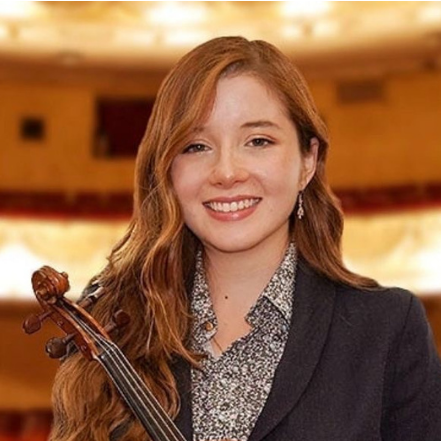 Maria Bernal is a Colombian violinist who began studying violin at a young age. She received her Master’s in violin performance from the Chicago College of Performing Arts at Roosevelt University, and is now a member of the Chicago Civic Orchestra. She performs with professional orchestras throughout the Midwest (including Peoria Symphony and Illinois Philharmonic), and gives chamber concerts throughout the city with a variety of high tier ensembles.
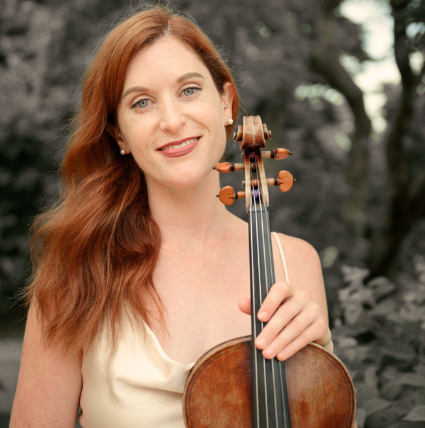 Always seeking a good adventure, Rachel Mossburg continually explores ways to nourish her musical wanderlust. She graduated from Indiana University Jacobs School of Music in 2020 with a music performance degree, and moved to Chicago shortly after to pursue her career as a professional musician. Rachel is an engaging performer, enjoys pushing musical boundaries by playing genres of all types, and has been captivating audiences with her exceptional string playing for over two decades.
Having performed with many of the midwest’s finest symphonic orchestras, various bands and eclectic groups, Rachel is well-versed in knowing how to inspire a crowd. Some of her highlight performance experiences in recent years include: sharing the stage with Michael Bublé for five shows, performing with the Trans-Siberian Orchestra, playing in the 18-piece orchestra for the Netflix series Our Planet: Live in Concert production tour for ten weeks, and performing with the Civic Orchestra of Chicago in Symphony Center. In addition, she is an active member of the Chicago-based group, Mucca Pazza, where she has been the lead electric violinist for five years.
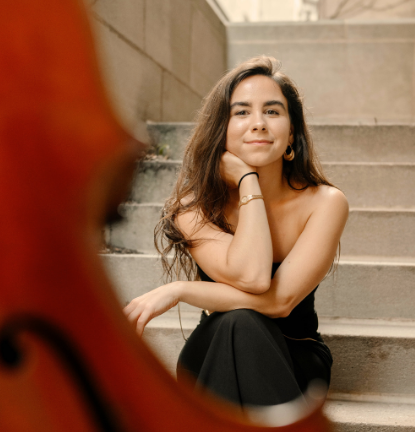 Sydney Andersen holds a Bachelor’s degree from the University of South Florida and a Master’s from DePaul University. She’s currently a section cellist for Gainesville Symphony; substitute for Ocala Symphony, Space Coast Symphony, and Punta Gorda Symphony; and has been a founding member of multiple independently run orchestras in Chicago including the Intermezzi Ensemble and Chicago Opera Productions.
She is currently a cello instructor for Sistema Ravinia, and has held multiple teaching positions through USF and DePaul; acting as the USF Community Music Project’s cello instructor, the USF Music Theory Teaching Assistant for levels I through IV, and a DePaul Community Music Division Teaching Artist. She has freelanced throughout the Midwest and Southeast in weddings, funerals, corporate events, and church services- and has even performed for several politicians, including the mayor of Chicago. She is on-call for Fever’s Candlelight Concert series, and has performed Vivaldi’s Four Seasons (among other programs) for them. She believes that the primary goal of music is communication and genuine human connection, and enthusiastically plays classical pieces, Arabic music, tango, or top R&B hits.